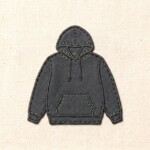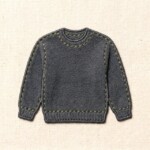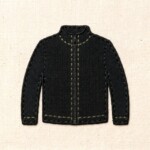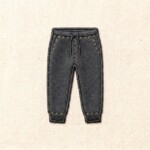
100+ styles. Everyday blanks in cotton, tri-blend, and performance fabric.
The Business Case for Uniforms: What the Data Says About Brand Consistency and Employee Performance
Uniforms are often treated as an operations detail. Something HR orders. Something store managers enforce. Something franchisees complain about when the sizing is wrong.
That view is too narrow.
Uniforms sit at the intersection of brand strategy, employee experience, customer trust, and operational consistency. For companies with frontline teams, distributed locations, franchise networks, service staff, school teams, field employees, or customer-facing departments, apparel is not just clothing. It is a visible business system.
The strongest uniform programs are not built around control for the sake of control. They are built around clarity. Who represents the company? What standard does the company project? How does the employee feel in the role? How consistently does the brand show up across locations?
The business case for uniforms starts there.
Uniforms Shape Team Identity
Research on organizational dress suggests that clothing at work is not neutral. It helps employees understand, express, and negotiate their role within an organization. Studies on organizational dress have explored how attire can communicate identity, status, belonging, and alignment with workplace values. (Communication Cache)
That matters because teams do not operate on job descriptions alone. They operate on signals.
A uniform tells an employee: you are part of this group. You are here in a specific role. You are visible. You represent something larger than yourself.
This does not mean every uniform automatically creates pride or performance. Poorly designed uniforms can create resistance, discomfort, or disengagement. Recent research on uniforms in service work points out that uniforms shape work identity in situational ways, depending on how employees, customers, managers, and work environments interact. (Sage Journals)
That is an important distinction. The uniform itself is not magic. The system around it matters.
A strong uniform program considers fit, comfort, role requirements, climate, movement, cultural context, and employee dignity. A bad program treats the workforce like mannequins. A good program treats apparel as part of performance infrastructure.
When employees feel that the uniform helps them do the job, the uniform supports identity. When they feel embarrassed, restricted, or ignored by sizing and fit, the uniform becomes a source of friction.
Customers Read Uniforms as Trust Signals
Customers make fast judgments. Before they read your values page or speak to a manager, they evaluate what they can see: the space, the signage, the staff, and the consistency of the experience.
Uniforms help customers identify who works there, who can help them, and whether the company appears organized.
This is especially important in retail, hospitality, healthcare-adjacent services, education, property services, events, logistics, food service, gyms, clinics, and franchise environments. In any setting where staff interact with the public, appearance becomes part of the service experience.
Research on service employee dress has examined how employee attire can affect customer interactions and customer-brand relationships, especially in service environments where the employee becomes a visible extension of the brand. (ResearchGate)
The practical takeaway is simple: customers trust what looks organized.
A consistent uniform reduces ambiguity. It helps customers know who to approach. It signals that the business has standards. It makes the employee easier to recognize and the brand easier to remember.
This is not about making staff look formal. A branded hoodie, performance tee, apron, polo, vest, or jacket can all function as a trust signal if the garment is clean, consistent, appropriate, and well-executed.
The uniform should match the brand promise. A premium clinic should not dress staff in cheap, faded polos. A field service company should not put technicians in apparel that cannot handle physical work. A youth sports organization should not order uniforms that fail halfway through the season.
Visual trust breaks when the clothing contradicts the brand.
Brand Consistency Across Locations Is an Operating Advantage
For multi-location businesses and franchises, uniforms become more than apparel. They become a consistency tool.
A customer should not feel like they are interacting with five different versions of the same company. Whether the location is in Toronto, Calgary, Ottawa, Vancouver, Mississauga, or a smaller regional market, the brand should present itself with discipline.
Uniforms support that discipline.
They standardize first impressions. They help franchise operators follow brand guidelines. They reduce local improvisation. They make photography, marketing, hiring, onboarding, and customer service feel more connected.
Without a uniform system, inconsistency spreads quickly.
One location orders black polos. Another orders navy. One manager uses embroidery. Another uses a large printed logo. One team wears hoodies. Another wears unbranded jackets. Over time, the brand becomes visually fragmented.
That fragmentation matters because brand consistency is not only a marketing issue. It is an operations issue.
Consistent uniforms help companies manage:
- New employee onboarding
- Role identification
- Customer-facing standards
- Franchise compliance
- Event staffing
- Safety visibility
- Seasonal campaigns
- Reorder planning
- Internal culture
The best systems are documented. They define approved garments, colours, decoration methods, logo placements, sizing ranges, reorder procedures, and replacement rules.
That level of structure may seem excessive until a business has 200 employees, 12 locations, and three different managers ordering apparel independently.
Then structure becomes savings.
Uniforms Can Support Employee Performance
Employee performance is shaped by many factors: training, compensation, leadership, tools, scheduling, culture, and role clarity. Uniforms are not a replacement for any of those.
But uniforms can support performance when they reduce distraction, reinforce role identity, and help employees feel prepared for the work.
Research in attire and perception suggests that clothing can influence how people are perceived by others and how they understand professional roles. Studies on workplace attire have examined links between dress, perceived professionalism, identity, and organizational meaning. (Aquila Digital Community)
For a company, the useful question is not, “Do uniforms increase productivity by themselves?” That would be too simplistic.
The better question is: “Does this uniform program remove friction and reinforce the behaviour we need?”
For a restaurant, that may mean staff are easy to identify and dressed for movement. For a school athletics department, it may mean teams look unified and game-ready. For a field services company, it may mean technicians arrive looking credible and prepared. For a franchise, it may mean every location meets the same visual standard.
Uniforms can also reduce the emotional labour of deciding what to wear. Employees do not need to interpret vague dress codes or spend money trying to meet unclear standards. The company sets the baseline.
That is operationally useful.
Sustainability Is Now Part of the Business Case
Uniform programs also have a sustainability dimension. Apparel sourcing decisions affect waste, replacement cycles, packaging, and long-term cost.
The most sustainable uniform is not always the one with the loudest sustainability claim. Often, the better starting point is durability.
If a garment lasts longer, washes better, and stays presentable through repeated use, the company buys fewer replacements. That reduces waste and lowers total cost of ownership.
Research on circularity in textiles emphasizes the importance of design choices, durability, reuse, recycling, and better product care in reducing environmental impact across the textile value chain. (PMC)
For business buyers, this means sustainability should be treated as a sourcing question, not a slogan.
Ask:
- Will this garment last under real use?
- Can employees wash it easily?
- Does the decoration method hold up?
- Can the item be reordered consistently?
- Is the supplier honest about what is and is not sustainable?
- Is packaging excessive?
- Can the company avoid over-ordering?
Uniform programs often fail sustainability goals because they are planned poorly. Companies order too many units in the wrong sizes. They choose cheap garments that need frequent replacement. They change styles too often. They fail to document reorders. They dispose of apparel without considering reuse or donation options where appropriate.
Better planning reduces waste before the product is even made.
The Real Business Case
The business case for uniforms is not that every company needs stricter dress codes. It is that visible teams need visible standards.
Uniforms support brand consistency, customer trust, employee identity, operational control, and smarter procurement. They are one of the few brand investments that show up every day in real life, not just in campaigns.
For executives, HR leaders, and brand strategists, the question is not whether uniforms are “worth it.” The question is whether your current apparel system is helping or hurting the business.
A strong uniform program should be:
- Consistent enough to protect the brand
- Flexible enough to fit real employees
- Durable enough to lower replacement costs
- Clear enough to simplify operations
- Professional enough to build trust
- Responsible enough to avoid wasteful sourcing
When designed properly, uniforms become part of the company’s operating language. They tell employees what team they are on. They tell customers who to trust. They tell the market that the brand pays attention to details.
That is the business case.
Wear US helps Canadian organizations build custom apparel programs that support brand consistency, team presentation, and long-term use. For teams reviewing their uniform strategy, start with a conversation, not a rushed order.